
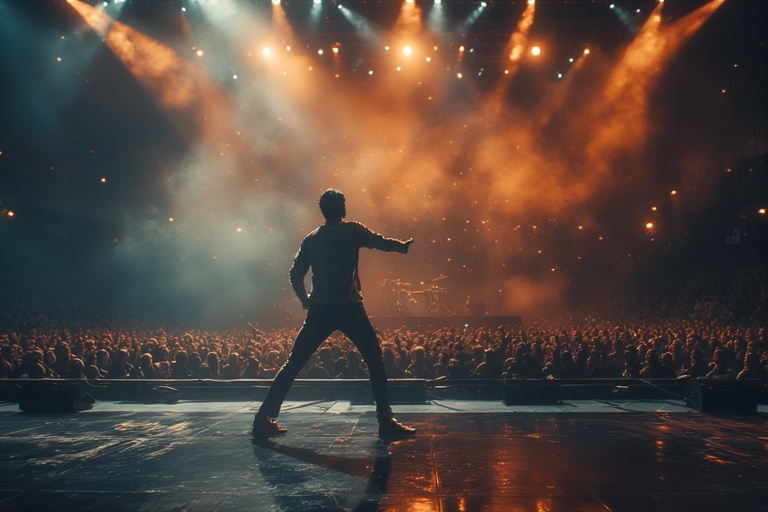
Why Charisma Is Making a Comeback
For a while, it seemed like the era of the electrifying rock frontman was fading into history — a relic of the days when Freddie Mercury commanded stadiums, Mick Jagger strutted across stages like he owned the world, and Axl Rose’s snarling energy could light up an entire arena. In the age of bedroom pop, polished electronic production, and algorithm-driven playlists, the raw, unfiltered charisma of a rock frontman felt almost… quaint.
But look closer, and you’ll see the tide turning. From stadiums to festivals, from TikTok to late-night TV, a new wave of bold, magnetic performers is breathing life back into rock’s theatrical core. Charisma is back — and fans are craving it more than ever.
🎤 The Lost Art of the Frontman
For much of the 2010s, the rock scene seemed to lose its swagger. The rise of electronic music, indie introspection, and hip-hop’s cultural dominance pushed rock further into niche corners. Many bands shifted focus to mood and sound rather than presence and showmanship. The anti-hero replaced the superstar, and the understated artist replaced the flamboyant performer.
While this introspective period birthed plenty of brilliant music, something visceral was missing — that electric connection between performer and audience. The frontman (or frontwoman) wasn’t just the singer; they were the emotional translator, the conduit of chaos and catharsis.
Without that spark, live shows often felt more like recitals than revolutions.
⚡ A New Generation with Old-School Energy
Now, a new class of performers is reclaiming that spotlight with a vengeance. Artists like Yungblud, Maneskin’s Damiano David, Sam Fender, and The Struts’ Luke Spiller are bringing back that fiery, untamed energy — with a modern twist. They blend classic rock’s showmanship with today’s cultural edge, tackling themes of identity, rebellion, and vulnerability, while never losing sight of performance as spectacle.
Take Damiano David of Måneskin, for instance. His unapologetic confidence, glam-inspired fashion, and onstage charisma recall the ghosts of Jagger and Bowie — yet his message is firmly rooted in Gen Z authenticity. Yungblud, meanwhile, channels punk chaos and unfiltered emotion, igniting crowds with raw energy and a call for self-expression.
Even mainstream artists outside the traditional rock world — like Harry Styles or Billie Joe Armstrong’s continued evolution with Green Day — show that charisma and connection still define great performance.
🎶 Why Audiences Crave Charisma Again
In an era dominated by screens and short attention spans, live music offers something digital can’t replicate: human connection. Fans don’t just want to hear songs; they want to feel them, to be part of something larger. A great frontman makes that possible — by turning a concert into an experience, a collective emotional eruption.
The pandemic played a surprising role in this resurgence. After years of isolation and livestreams, audiences craved real energy, movement, and charisma. When festivals returned, it wasn’t the subdued acts that drew headlines — it was the ones that blew the roof off.
Performers like Paramore’s Hayley Williams and Foo Fighters’ Dave Grohl have become proof that stage presence isn’t about ego — it’s about emotional generosity. It’s about giving everything to the crowd.
🕶️ Fashion, Attitude, and Identity
Rock charisma has always been about more than just voice — it’s an attitude. Today’s frontmen and women understand that performance is a visual art as much as a sonic one. From androgynous fashion statements to raw, sweat-drenched performances, they’re reviving the aesthetic theater that once defined rock.
There’s also a deeper cultural resonance. In a world where authenticity and individuality are celebrated, the rock frontman becomes a symbol of freedom — not perfection. Their confidence isn’t about domination but liberation. They embody rebellion in a time when conformity often hides behind curated social media feeds.
🤘 Women Leading the Charge
Perhaps most excitingly, this new age of charisma isn’t limited to men. Artists like Halestorm’s Lzzy Hale, Wolf Alice’s Ellie Rowsell, and Dorothy Martin are redefining what it means to command a stage. They blend ferocity and vulnerability, proving that the “frontman” archetype is really about energy — not gender.
Even pop-adjacent artists like Miley Cyrus and P!nk bring that rock-star energy to their shows, channeling the same sense of danger, confidence, and showmanship that defined earlier eras.
🔥 The Modern Evolution of Rock Stardom
The rebirth of the frontman isn’t nostalgia — it’s evolution. These artists are taking cues from the past but rewriting the rules. They embrace digital culture, use social media to amplify their personality, and still bring an old-school ferocity to the stage.
In a landscape where anyone can upload a track to Spotify, charisma has become the great differentiator. It’s not just about who can sing — it’s about who can command attention, ignite emotion, and make the crowd believe.
🎸 The Flame Burns On
The return of the rock frontman is more than a musical trend — it’s a cultural correction. For too long, the raw, messy, human side of performance was overshadowed by production polish. Now, audiences are saying it loud and clear: give us energy, give us soul, give us someone who means it.
From small club stages to global festivals, the fire is back. Charisma isn’t a relic — it’s the heartbeat of rock. And as long as there are artists willing to throw themselves into the music, mic in hand and heart on fire, the spirit of the rock frontman will never die.