
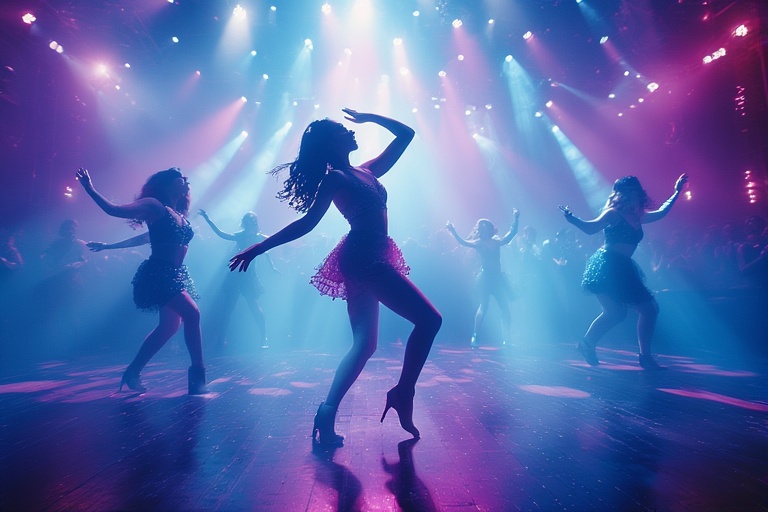
Redefine how fans consumed music
When MTV launched on August 1, 1981, with the words “Ladies and gentlemen, rock and roll,” the world didn’t know it was witnessing a revolution. The marriage of music and visual storytelling would soon redefine how fans consumed music, turning songs into cinematic experiences, artists into icons, and pop culture into a visual playground. From groundbreaking choreography to controversial imagery, some music videos didn’t just entertain — they changed everything.
Here’s a deep dive into the music videos that shaped generations, pushed creative boundaries, and forever altered the landscape of pop culture.
1. Michael Jackson – “Thriller” (1983)
No list could begin anywhere else. Directed by John Landis, “Thriller” wasn’t just a music video — it was a 14-minute horror movie with a dance break that became the most iconic in history. Jackson’s blend of music, fashion, and cinematic storytelling turned the video format into a legitimate art form. It shattered racial barriers on MTV and helped propel Jackson’s Thriller album to become the best-selling record of all time. The red leather jacket, the zombie choreography, the werewolf transformation — “Thriller” became the gold standard for every music video that followed.
2. Madonna – “Like a Prayer” (1989)
Few videos have sparked as much controversy — or cultural conversation — as Madonna’s “Like a Prayer.” Mixing religious iconography, racial imagery, and sensual undertones, the video blurred the line between faith and rebellion. It caused Pepsi to cancel a multimillion-dollar endorsement deal but cemented Madonna as the queen of artistic provocation. More importantly, it opened the door for artists to use music videos as social commentary rather than pure performance.
3. Nirvana – “Smells Like Teen Spirit” (1991)
Grunge officially exploded into the mainstream when Nirvana released “Smells Like Teen Spirit.” Directed by Samuel Bayer, the video depicted a high school pep rally devolving into chaos — a perfect metaphor for the disillusioned youth of the early ’90s. It introduced a new aesthetic of rawness and rebellion that stood in stark contrast to the polished pop of the late ’80s. The image of Kurt Cobain screaming beneath flickering fluorescent lights became an emblem of Generation X.
4. Britney Spears – “…Baby One More Time” (1998)
When Britney stepped into that school hallway wearing a tied-up uniform, pop music had its new face. Directed by Nigel Dick, the video was simple but unforgettable — blending innocence with confidence, teen spirit with superstar magnetism. It didn’t just launch Spears’ career; it redefined late-’90s pop and inspired countless imitations. The schoolgirl look, the synchronized dance, the catchy handclaps — it was a perfect storm of youthful rebellion wrapped in bubblegum gloss.
5. Beyoncé – “Single Ladies (Put a Ring on It)” (2008)
With one camera, three dancers, and flawless choreography, Beyoncé created a cultural juggernaut. Directed by Jake Nava, “Single Ladies” showed the world that minimalism could be powerful. The black-and-white aesthetic, leotards, and hand-twisting dance moves became a viral phenomenon before “viral” was even part of everyday vocabulary. Its influence extended beyond pop culture — it became a statement about empowerment, independence, and self-worth.
6. Lady Gaga – “Bad Romance” (2009)
Lady Gaga’s “Bad Romance” wasn’t just a music video; it was an art installation. With avant-garde fashion, surreal imagery, and choreographed chaos, Gaga pushed pop visuals into a new era. The video’s disturbing beauty, from her white latex outfits to the fiery finale, made it clear that pop stardom could be as much about concept as it was about sound. It influenced an entire generation of artists to treat music videos as immersive performance art.
7. Michael Jackson – “Billie Jean” (1983)
Before “Thriller,” there was “Billie Jean,” the video that helped break the color barrier on MTV. Jackson’s effortless dance moves, the glowing sidewalk, and his sleek style elevated the concept of performance-based videos. It turned dance into a narrative device and established Jackson’s visual signature — precise, magical, and utterly captivating.
8. A-ha – “Take On Me” (1985)
Part live-action, part pencil-sketch animation, A-ha’s “Take On Me” revolutionized visual storytelling with its innovative rotoscope animation technique. The video’s narrative — a woman pulled into a comic book world — blended fantasy and romance in a way no one had seen before. It proved that music videos could merge technology and emotion to create something timeless. Decades later, it’s still one of the most creative videos ever made.
9. Queen – “Bohemian Rhapsody” (1975)
Though often overshadowed by later, flashier productions, Queen’s “Bohemian Rhapsody” essentially invented the modern music video. Made to promote the single on television, it featured groundbreaking visual effects and an unforgettable shot of the band’s four faces lit dramatically against a black background. The video wasn’t just promotional — it was theatrical, experimental, and way ahead of its time.
10. Childish Gambino – “This Is America” (2018)
Donald Glover’s “This Is America” is a masterclass in layered symbolism. Every frame carries meaning — from the dancing children to the sudden bursts of violence — painting a haunting portrait of American culture, gun violence, and racial tension. Directed by Hiro Murai, the video sparked widespread analysis, conversation, and debate. It proved that in the age of social media, a music video could still be a powerful political statement.
11. Peter Gabriel – “Sledgehammer” (1986)
Using stop-motion animation, claymation, and a dizzying array of special effects, “Sledgehammer” turned Peter Gabriel into a living canvas. The video was a technical marvel and won a record nine MTV Video Music Awards. Its playful inventiveness set new expectations for creativity in the medium, blending humor, surrealism, and art-school experimentation in ways that inspired generations of directors.
12. TLC – “Waterfalls” (1995)
“Waterfalls” was a socially conscious visual masterpiece that tackled heavy issues like HIV and drug addiction. Its use of early CGI, combined with heartfelt storytelling, made it one of the most impactful videos of the ’90s. TLC proved that mainstream pop acts could address real-world problems — and still dominate the charts.
13. OK Go – “Here It Goes Again” (2006)
Who knew treadmills could make history? OK Go’s DIY-style video, featuring an elaborate synchronized routine filmed in a single take, became one of YouTube’s first viral hits. It showed that clever concepts and originality could compete with million-dollar productions — a pivotal moment for the internet age of music videos.
14. Billie Eilish – “Bad Guy” (2019)
Billie Eilish brought back the art of unpredictability. “Bad Guy” took the absurd and made it aesthetic — blending humor, menace, and surreal imagery in a way that felt both Gen Z and timeless. It redefined what it meant to be a pop star in the streaming era: weird, self-aware, and completely in control.
The Legacy of the Music Video
Over the decades, music videos have evolved from promotional tools to cultural milestones. They shape trends, influence fashion, inspire memes, and serve as time capsules of creativity. From MTV to YouTube to TikTok, the power of visuals in music remains undeniable.
Each generation has its defining moments — from Jackson’s moonwalk to Beyoncé’s hand flips, from Gaga’s theatrical chaos to Gambino’s haunting allegory. The greatest music videos don’t just reflect pop culture — they create it.
And as technology continues to evolve, so too will the art form. The next “Thriller” might be interactive, AI-generated, or entirely in virtual reality. But one thing’s for sure: the magic of merging sight and sound will always remain at the heart of music’s most unforgettable moments.